Basecamp in Horse Shoe, NC: Direct Access to Pisgah’s Best Mountain Biking Trails
I didn’t originally plan to ride Pisgah — it just happened.
I was visiting family in Birmingham and decided to take a detour through Western North Carolina. I had heard about Pisgah’s legendary mountain biking scene for years, and I figured it was finally time to experience it for myself.
With Asheville nearby, it also seemed like the perfect chance to explore the area while I was there.
The only downside was that I still had to work during the trip, which limited how much time I could spend on the bike. But I made the most of the time I had and came away with a much better understanding of the terrain, the trails, and what makes Pisgah such a unique riding destination.
Why Pisgah National Forest Is a Top Mountain Biking Destination
Pisgah National Forest covers more than 500,000 acres across Western North Carolina. It is one of the oldest national forests in the United States and has become one of the most respected mountain biking destinations in the Southeast.
The terrain here is rugged and unpredictable — dense forests, steep climbs, technical descents, and a mix of old-school singletrack and newer purpose-built trails.
Within the Pisgah Ranger District, riders have access to dozens of mountain bike trails offering everything from challenging climbs and technical rock sections to fast, demanding descents.
People come here because of the challenge, the variety, and the sheer amount of terrain available.
Trail conditions change constantly depending on weather and recent storms. Water reshapes sections of trail, roots become exposed, and familiar lines can feel completely different from one visit to the next.
Pisgah isn’t a place that gives you an easy ride.
It’s a place that tests your skills, fitness, and patience.
And it definitely tested mine.
It also kicked my butt.
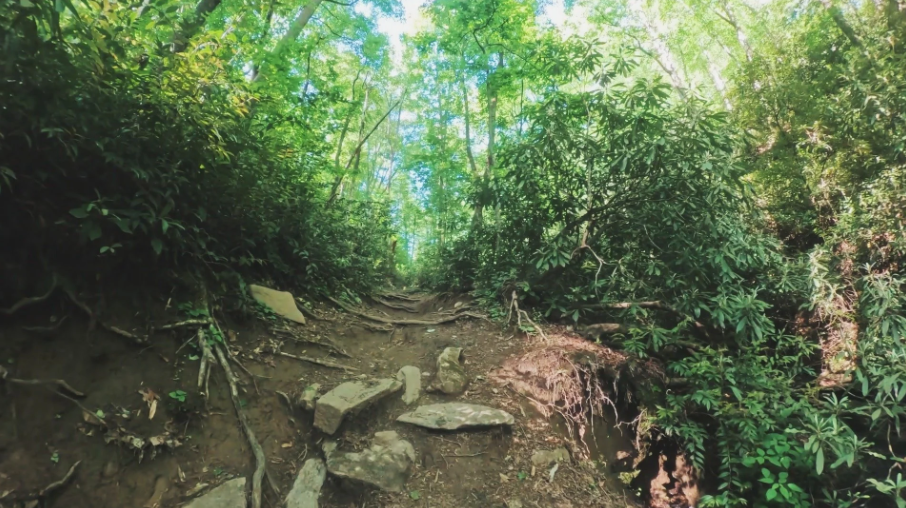
Why Ride in Pisgah National Forest
Technical singletrack in Pisgah National Forest — roots, rocks, and tight lines define the riding here.
Pisgah’s trails are rough, technical, and constantly evolving.
Water runs through the forest year-round, carving new paths, moving debris, and reshaping sections after heavy rain.
You’ll encounter exposed roots, loose rocks, steep climbs, tight corners, and sudden drops — sometimes all within the same trail section.
You’ll cross creeks.
You’ll hike your bike.
You’ll hear waterfalls in the distance while pushing uphill through the forest.
It’s raw. It’s challenging. And that’s exactly what makes it memorable.
All of this happens beneath a thick green canopy that makes Pisgah feel both beautiful and brutally demanding at the same time.
Where to Stay and Eat in Horse Shoe, NC for Mountain Biking Pisgah
Quiet mountain cabin in Horse Shoe, NC — a convenient base for exploring Pisgah.
I found a simple cabin tucked away in a quiet part of Horse Shoe, a small community that puts you right in the middle of everything.
The cabin was located up a mountain road with other homes and cabins scattered nearby. It was peaceful, low-key, and exactly what I needed after long days on the bike.
The mornings were one of my favorite parts.
The birds were incredibly loud.
I honestly can’t remember the last time I heard birds singing like that.
It made me think:
“This must be a good place if the birds are this happy.”
It felt isolated without being completely remote. Neighbors were close enough if something went wrong, but it still had the quiet mountain atmosphere I was looking for.
Just down the main road from the cabin, I found Cognative Cafe, a coffee shop that shares space with Cognative MTB, a local mountain bike apparel brand.
The coffee was excellent, sourced from an Asheville-area roaster, and the pastries were worth stopping for.
My recommendations:
- The blueberry scone
- The cardamom roll
They also have a selection of toast options that make a great post-ride meal.
Across the street is Roots & Bones, an elevated Southern restaurant with a rotating chef-driven menu.
After a few rides, I kept coming back for the farmer’s salad. I also tried the short rib meatloaf, which was solid.
The biscuits?
I’d probably skip them.
Everything else was worth ordering.
Mountain Biking Pisgah: What I Rode and What to Expect
Trail marker near Avery Creek Trail — don’t let the blue rating fool you. Pisgah’s difficulty ratings can feel much harder than expected.
The riding in Pisgah was different from what I expected based on the YouTube videos I had watched.
You can watch endless trail videos, but being there is a completely different experience.
The first thing you notice:
You climb.
Everywhere.
Almost every trail requires climbing, and none of it feels easy.
Pisgah is not a beginner-friendly riding destination. Expect blue and black-rated trails, but understand that the rating system here feels different from many other places.
A Pisgah blue trail can ride like a black trail somewhere else.
The two trails I rode during this trip gave me a clear understanding of what Pisgah demands:
- Elevation
- Technical skill
- Patience
Pro Tip: Most riders you meet here are locals. Ask questions. They know the trails, weather conditions, and which sections are riding well. I learned more from quick conversations in parking lots than from hours of watching online videos.
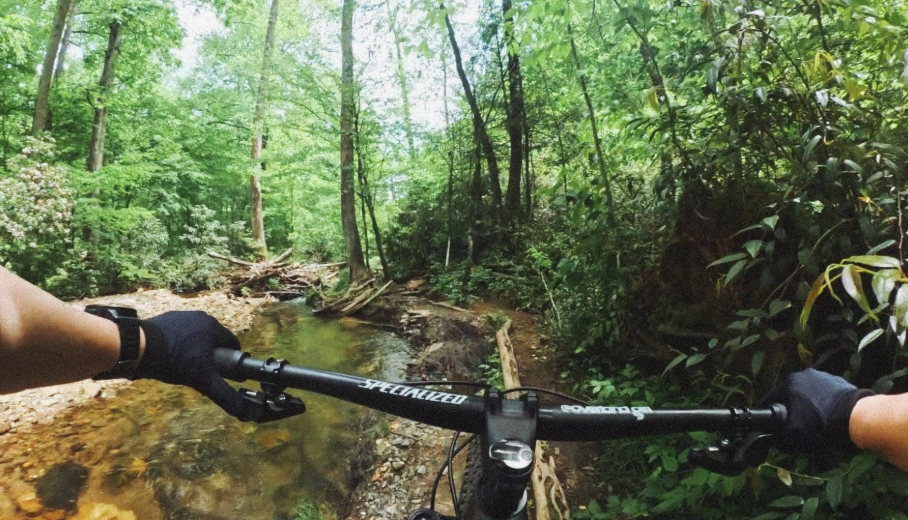
Sycamore Cove Trail
Sycamore Cove Trail — a great introduction to Pisgah’s roots, rocks, and technical terrain.
Sycamore Cove was the first trail I rode in Pisgah.
It starts directly from the Ranger Station parking lot, making it one of the easiest trails to access if you’re new to the area.
If this is your first ride in Pisgah, this is where I’d start.
It gives you a good introduction to the style of riding you’ll find throughout the forest:
- Roots
- Tight corners
- Short, punchy climbs
- Technical sections
But without the full intensity of some of the bigger trails.
I rode Sycamore Cove several times during my stay. It’s shorter and more manageable than Avery Creek, but it still delivers the classic Pisgah experience.
I highly recommend starting here before moving on to more demanding trails.