Newspaper Rock: A Hidden History Along the Road to Canyonlands
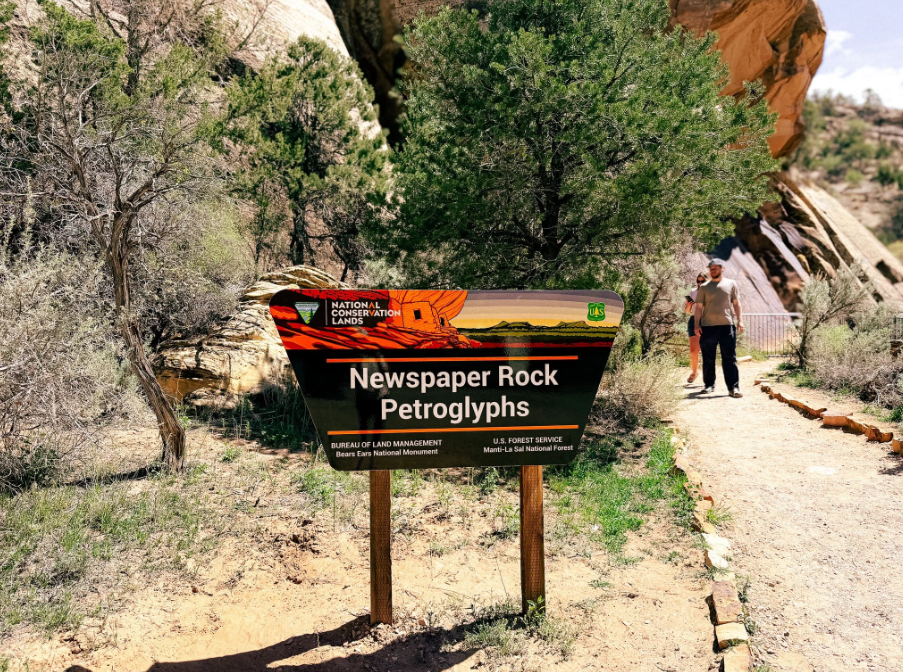
As I was driving down Utah State Route 211 toward the Needles District of Canyonlands National Park, I spotted a sign for Newspaper Rock.
I had heard about it before, but I didn’t realize it was directly on the route. In fact, it’s right beside the road, making it one of the easiest archaeological sites to visit in southeastern Utah.
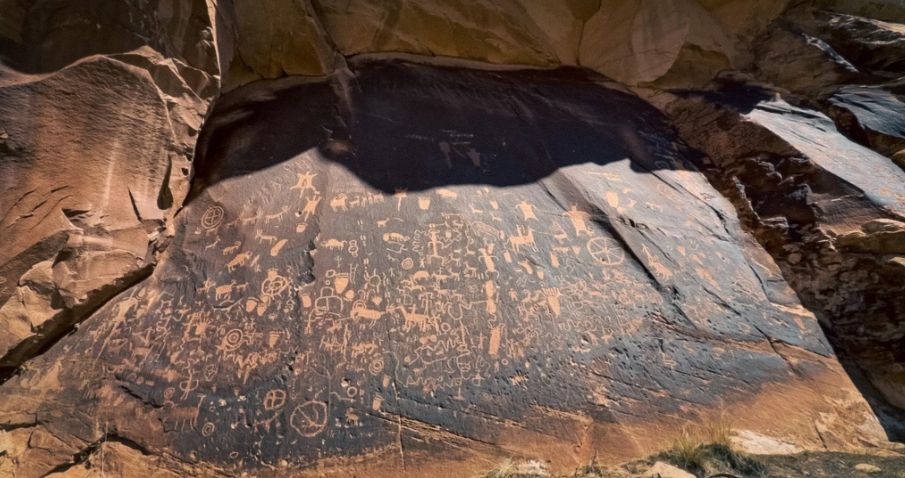
What immediately caught my attention was the sheer number of petroglyphs covering the rock panel. I had seen ancient rock art before, but never so many carvings gathered in one place.
The sandstone wall is covered with images, and at first it’s hard to know where to look.
Then the details begin to appear.
A bighorn sheep. A footprint. Human figures. Symbols whose meanings have been lost over time.
Every time you look across the rock face, another carving seems to reveal itself.
Located along Utah State Route 211 in Bears Ears National Monument, Newspaper Rock sits directly on the way to the Needles District of Canyonlands National Park. The panel contains hundreds of petroglyphs created over centuries by people who traveled through this landscape long before modern roads existed.
Some carvings are believed to be nearly 2,000 years old. The sandstone beneath them is much older, formed from ancient sand dunes roughly 200 million years ago.
Standing in front of the panel feels like reading fragments of a story. You can recognize animals, people, and footprints, but the meaning behind many symbols remains unknown.
What Is Newspaper Rock?
Newspaper Rock is a large sandstone panel covered with hundreds of petroglyphs created by different groups of people over many generations.
Rather than being made at one specific time, the carvings were added gradually, creating a visual record of the people who lived in and traveled through this region.
Today, visitors can view the panel from a short walkway and overlook, making it one of the most accessible archaeological sites in Utah.
Why Is It Called Newspaper Rock?
The site earned its name because the rock panel resembles a community bulletin board filled with messages and stories.
Over hundreds of years, different groups added new carvings to the surface. Like a newspaper recording events and information, the rock became a place where people left behind symbols, stories, and reminders of their presence.
Although archaeologists have studied the site extensively, many of the carvings remain open to interpretation.
Some images are easy to understand, while others continue to raise questions about their original meaning.
What You’ll See on the Rock Face
One of the most impressive things about Newspaper Rock is how many carvings are concentrated in one small area.
Visitors can see:
- Bighorn sheep
- Human figures
- Footprints
- Deer and other animals
- Hunting scenes
- Geometric patterns
- Unknown symbols
- Horse and rider figures from later periods
The longer you look, the more details appear.
Images that initially blend into the dark desert varnish become easier to recognize, revealing just how much history is preserved on this single piece of sandstone.
Who Created the Petroglyphs?
The carvings at Newspaper Rock were created by multiple groups of people over centuries.
Researchers believe the panel includes contributions from ancestral Puebloan peoples, Fremont groups, Ute people, and others who traveled through southeastern Utah.
Some of the earliest carvings date back many centuries, while horse and rider images were added later after horses were introduced to the Southwest.
Together, these carvings create a timeline of human activity across generations.
Visiting Newspaper Rock
One of the best things about Newspaper Rock is how easy it is to visit.
Unlike many archaeological sites that require hiking, Newspaper Rock sits directly beside Utah State Route 211 between Indian Creek and the Needles District of Canyonlands National Park.
A parking area and short walkway lead visitors to an overlook where the entire panel can be viewed.
Location
📍 Newspaper Rock State Historic Monument
GPS: 38.0343, -109.5182
Why Newspaper Rock Is Worth Stopping For
Many archaeological sites require visitors to imagine what life looked like hundreds or thousands of years ago.
Newspaper Rock is different.
The evidence is right in front of you.
The carvings remain on the same sandstone surface where they were created generations ago. Standing there, it’s easy to imagine travelers stopping at this location centuries earlier and adding their own symbols to the growing collection.
We may never fully understand what every image represents.
But that mystery is part of what makes Newspaper Rock fascinating.
Every time you look back at the panel, another carving seems to appear.
It isn’t just a collection of petroglyphs.
It’s a reminder that people have been traveling through this landscape, sharing stories, and leaving their mark for thousands of years.